

Baseball best strength training helps young players swing with more force, move better on the field and build the physical base the game asks for. At 365 Baseball & Softball in San Rafael, we work with players from across Marin County on the strength, coordination and speed that show up on game day.
Whether your athlete plays baseball or softball, their strength work should fit their age, experience, fitness level and goals. A good program mixes proper technique, gradual resistance, mobility and recovery so players improve safely and keep improving.
What Is Strength Training for Baseball and Softball Players?
Strength training means making muscles work against resistance. That resistance can come from bodyweight, dumbbells, bands, medicine balls or other equipment.
Unlike a general gym routine, our strength work focuses on what carries over to the diamond: producing force, controlling movement, staying balanced and keeping the body stable through every play.
For ballplayers, that means a stronger swing, a quicker break toward second, a better throw from deep in the hole and cleaner footwork on a tough grounder. Stronger legs, better trunk control and sharper coordination help in almost every part of the game.
Technique always comes before adding weight. Young players need age-appropriate coaching and qualified supervision every step of the way.
What Are the Best Exercises for Baseball and Softball Strength?
The best exercises depend on your player’s needs and current ability. A balanced routine usually includes lower-body work, upper-body movements, core training and exercises that build control and coordination.
Here are the categories we lean on most.
1. Squats for Lower-Body Strength
Squats train the legs and hips while challenging balance and trunk control. Those are the muscles that power sprinting down the line, jumping for a liner and loading into a swing.
Players start with bodyweight squats, then move to goblet squats or other loaded versions with proper supervision.
Benefits include:
- Leg and hip strength
- Controlled movement
- Better athletic positioning, like a solid fielding stance
- A base for more advanced exercises
Good form and the right range of motion matter far more than heavy weight.
2. Lunges for Balance and Stability
Lunges work one leg at a time and build balance, coordination and control. Forward, reverse and stationary lunges are all options.
They’re especially useful for players who need to speed up, slow down and change direction, like an outfielder breaking back on a ball or a baserunner rounding third.
Start with bodyweight lunges and keep a steady posture. Add resistance only when the player can do them consistently with good form.
3. Push-Ups for Upper-Body Strength
Push-ups work the chest, shoulders, triceps and trunk. They’re a simple way to build upper-body strength without special equipment.
Beginners can push from an elevated surface or use another modification, then work toward standard push-ups as they get stronger.
For ballplayers, upper-body training should be part of a balanced plan that also builds shoulder control, mobility and the muscles that support healthy movement.
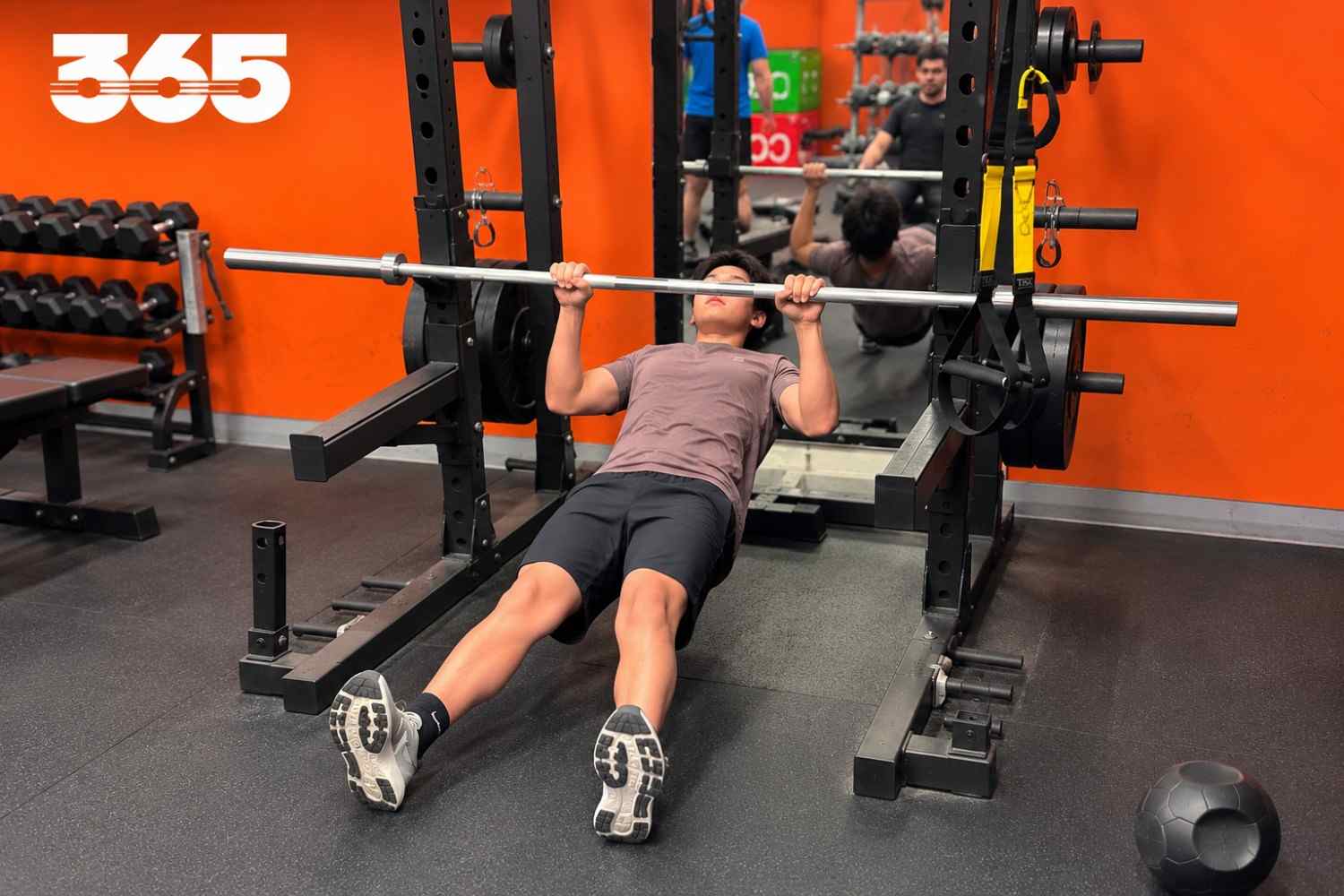
4. Rows for Back and Shoulder Support
Rows strengthen the upper back and pulling muscles. Players can do them with bands, dumbbells, cables or other equipment.
A controlled row teaches good posture and smooth control through the shoulders and shoulder blades.
Baseball and softball players should balance pushing with pulling. Throwers also benefit from coaching that accounts for shoulder mobility, throwing volume and recovery, which is a big part of our arm care work.
5. Hip Bridges for Glute Strength
Hip bridges train the glutes and teach controlled hip extension. Strong hips help with running, jumping, changing direction and driving through a swing or throw.
Players start with bodyweight bridges and move to harder versions when they’re ready.
The goal is control, not arching the lower back or rushing reps.
6. Planks for Core Stability
Planks challenge the abs and trunk muscles that hold the body in position during movement.
A strong, coordinated trunk helps players stay in control while running, landing, changing direction and transferring power from the legs into a swing or throw.
Start with short holds the player can do with good alignment. Make them longer or harder gradually, never at the cost of form.
7. Medicine Ball Exercises for Power
Medicine ball work teaches players to produce force fast. Depending on experience and the coach’s plan, that might mean controlled chest passes or rotational throws.
We introduce these only after a player has the technique down. Rotational throws for baseball and softball players should always be supervised and fit the player’s stage of development.
Strength and power are related but not the same. Strength is producing force. Power is producing it quickly.
How to Build a Strength Workout for Young Ballplayers
A good strength session has clear goals, not a random pile of exercises.
A beginner session might look like this:
- A dynamic warm-up with light movement.
- Bodyweight squats for lower-body strength.
- Push-ups or a suitable variation.
- Band or dumbbell rows.
- Hip bridges.
- A short plank hold.
- A cool-down and recovery.
Sets, reps and rest should match the player’s age, experience and goals. Beginners should learn the movements before adding weight or complexity.
Players already in team practices need to watch their total workload. Strength sessions have to fit around practices, games, throwing schedules and enough recovery.
How Often Should Baseball and Softball Players Strength Train?
It depends on age, experience and the rest of the schedule. Many players can start with two or three supervised strength sessions per week, but the best plan is individual.
A balanced routine should include:
- Strength exercises for major muscle groups
- Movement quality and mobility work
- Baseball or softball skill practice
- Enough sleep and recovery
- Gradual increases in difficulty
More isn’t always better. Constant soreness, unusual fatigue or slipping performance can mean a player needs more rest or a changed plan.
Young players can benefit from strength training when it’s well designed, supervised and focused on technique rather than max lifts.
Strength Training That Fits the Baseball and Softball Season
Baseball and softball take strength, speed, coordination, balance and a lot of skill. Strength work helps build those qualities, but it should support practice, not replace it.
A balanced baseball or softball training plan may include:
- Lower-body strength exercises
- Core stability and controlled rotational movements
- Upper-body pulling and pushing
- Single-leg balance and strength work
- Speed and agility drills
- Recovery and mobility
Throwers need extra attention to workload and shoulder health. Heavy lifting or high-volume throwing shouldn’t be added without looking at the player’s experience, schedule and recovery.
Good coaching helps players choose the right exercises and do them with proper technique. For a deeper look at general strength for any sport, see our sister facility’s guide at 365 Athlete Development.
Where to Find Baseball Strength Training in San Rafael and Marin County
If you’re looking for baseball or softball strength training in San Rafael, our 12,000 sq ft facility has a dedicated strength space alongside our turf and batting cages. We work with players who want baseball and softball instruction, practice time and athletic development all under one roof.
When choosing a program, look for coaching that considers your player’s sport, age, experience, fitness level and goals. Ask us about classes, private lessons, schedules and the exercises we use before you register.
Families come to us from across Marin County, including Novato, Mill Valley, Larkspur, Corte Madera and San Anselmo.
365 Baseball & Softball
- Address: 700 A Street, Suite A, San Rafael, CA 94901
- Phone: (510) 880-3090
- Website: https://www.365baseballandsoftball.com/
Reach out to confirm current strength and athletic development options, age groups, schedules and availability.
Frequently Asked Questions
What is the best strength training exercise for baseball and softball players?
There’s no single best exercise. Squats, lunges, push-ups, rows, hip bridges and planks all have a place in a balanced program. The right mix depends on the player’s position, experience, goals and movement ability.
How can young ballplayers get stronger?
With a consistent, progressive program that uses the right resistance, good technique and enough recovery. Good coaching makes sure exercises fit the player.
Is strength training good for young athletes?
Yes. Well-designed, supervised strength training helps young athletes build strength, coordination and movement control. Programs should be age-appropriate and put technique ahead of heavy lifting.
Should baseball and softball players lift weights?
They can benefit from well-programmed resistance training. The routine should support skill practice and account for throwing demands, game schedules and recovery.
Where can I find baseball strength training in San Rafael, CA?
Right here at 365 Baseball & Softball, 700 A Street, Suite A, San Rafael, CA 94901. Call (510) 880-3090 or Book My Assessment to see which option fits your player.
Build a Stronger Foundation for the Diamond
The best strength program helps players develop step by step, move with control and stay consistent. Lower-body strength, upper-body work, core stability, skill practice and recovery all work together for long-term growth.
If your player wants to get stronger for baseball or softball, Book My Assessment and we’ll build a plan that starts from exactly where they are today.


